| DOCUMENT TYPE: FIELD ARCHAEOLOGICAL CASE FILE | DOC-ID: ARC-2026-0427-SBG |
| CLASSIFICATION: TOP SECRET // NOFORN | ARCHIVE DATE: 2026.04.27 |
| LEAD RESEARCHER: Dr. H. Lindqvist | INCIDENT SITE: 56.5772°N, 16.6444°E — Öland, SWE |
▌ ENGLISH SECTION — PRIMARY DOCUMENTATION
PRELIMINARY OVERVIEW
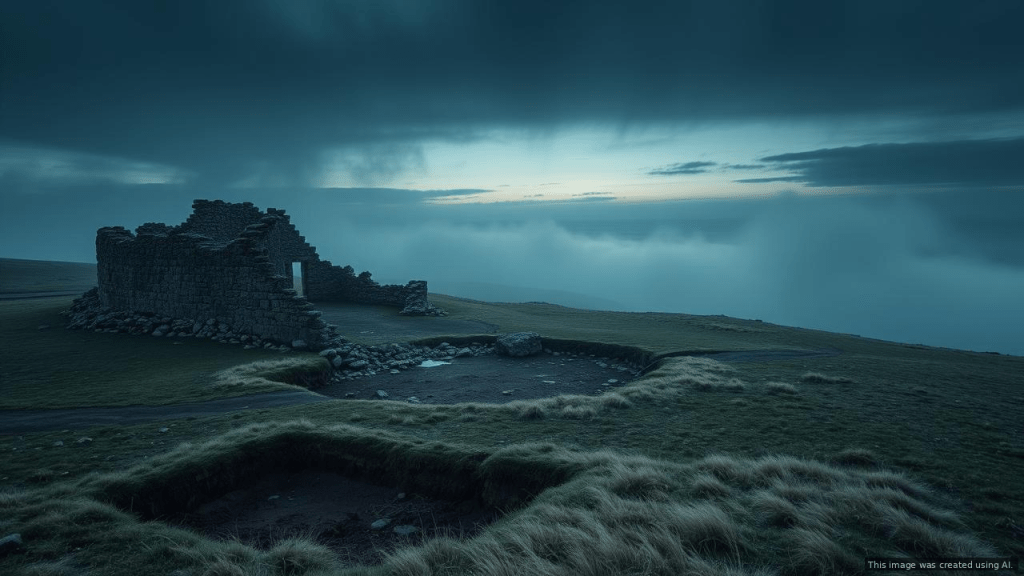
Sandby Borg is a 5th-century Migration Period ringfort situated on the southeastern coastal flats of the Swedish island of Öland, in the Baltic Sea. It is one of fifteen surviving ringforts on the island, but it is the only known site at which the inhabitants were killed in a single coordinated event and left where they fell. The fortification encompasses an area of roughly 5,000 square metres, enclosed by a limestone curtain wall measuring an average of four metres in thickness. Excavations conducted between 2010 and the present have produced an evidentiary record without parallel in Northern European Iron Age archaeology: a settlement frozen at the precise moment of its annihilation.
SITE TOPOGRAPHY AND DISCOVERY
The site lies approximately 100 metres inland from the modern shoreline, on a flat, treeless coastal plain known locally as the Stora Alvaret. Aerial reconnaissance in the late 1990s identified faint subsurface features consistent with a ringfort, but the area was not investigated in detail until a series of test pits were opened in 2010 following the recovery of unauthorised metal-detected finds, including five gilded silver brooches of high typological status. The discovery prompted a long-term, state-supervised excavation under the auspices of Kalmar County Museum. The interior was found to contain at least 53 individual house foundations arranged radially around a central square — an unusually dense and orderly internal layout.
FORENSIC EVIDENCE OF MASSACRE
As of the most recent fieldwork season, the partial remains of at least 26 individuals have been recovered from the interior of the fort, with osteological projections suggesting the total casualty count may exceed 200 once excavation is complete. The skeletal record exhibits unambiguous indicators of violent, peri-mortem trauma: blunt-force injuries to the cranial vault, sword cuts to the cervical vertebrae, and clear defensive wounds along the forearms. Critically, the bodies were not buried. They were left in doorways, in hearth corners, and in the open ground between houses — a configuration that violates every known mortuary norm of contemporaneous Scandinavian society. No regional culture of the period is documented to have abandoned its own dead, nor those of its enemies, in this manner.
THE ANOMALY OF UNTOUCHED WEALTH
The most disquieting feature of the assemblage is not the violence itself, but what was left behind. Caches of gilded silver brooches, Roman gold solidi, glass bead strings, and a deliberately concealed hoard of finger rings were recovered from cooking pots, wall niches, and beneath floor planks — places where they had been hidden, presumably in anticipation of attack. None of these caches were retrieved by the perpetrators. Local opportunists in subsequent centuries did not loot the site either; oral memory in the surrounding parishes describes the ringfort as cursed ground (“den onda borgen”) into the early modern period. The attackers, whoever they were, did not come for plunder. They came to extinguish.
UNRESOLVED HYPOTHESES
No contemporary written source references the event, as the Migration Period in Scandinavia is functionally pre-literate. Three competing models presently dominate scholarly discourse: (1) an internecine elite conflict triggered by the collapse of Western Roman gold-flow networks circa AD 476–500, in which a rival faction sought the symbolic obliteration of a competing dynasty; (2) a punitive expedition mounted by a coastal raiding confederation against a community that had defaulted on tribute or harboured fugitives; (3) a ritual destruction of a perceived contagion — biological, social, or supernatural — in which the inhabitants and their material culture were rendered taboo and abandoned in situ. None of the three models adequately accounts for the totality of the evidence. The site remains, in formal classification terms, an open file.
◆ FIELD DATA / INCIDENT LOG
— EVENT CHRONOLOGY: c. AD 480 ± 20, calibrated radiocarbon, charred barley stratum H-04.
— RECOVERED REMAINS: minimum 26 individuals; demography skewed toward adult males and infants; conspicuous absence of women of reproductive age.
— TRAUMA TYPOLOGY: 14 cranial blunt-force; 7 sharp-force cervical; 4 perimortem fractures consistent with falls during flight.
— MATERIAL CULTURE IN SITU: 5 gilded silver brooches (Cache A, House 40); 3 Roman gold solidi (Cache B, hearth pit); finger-ring cluster (Cache C, post-hole); approx. 240 glass beads dispersed.
— POST-EVENT ACTIVITY: zero indicators of looting, reoccupation, or burial intervention for >1,400 years.
— ANOMALY FLAG: discovery of an articulated juvenile sheep skeleton placed across a doorway in House 52, interpreted as deliberate threshold marker — significance unresolved.
▌ 한국어 섹션 — 기밀 번역 문서
개요 및 사건 정의
산드뷔 보리(Sandby Borg)는 발트해의 스웨덴령 외란드(Öland) 섬 남동부 해안 평지에 위치한 5세기 민족이동기(Migration Period)의 환상열형 요새이다. 외란드 섬에 잔존하는 열다섯 곳의 환상 요새 가운데, 거주민 전체가 단일한 조직적 폭력 사건에 의해 살해된 후 시신이 그대로 방치된 사례로 기록된 유적은 이곳이 유일하다. 요새의 내부 면적은 약 5,000 평방미터이며, 평균 두께 4미터의 석회암 성벽으로 둘러싸여 있다. 2010년 이후 진행된 발굴 조사 결과, 본 유적은 북유럽 철기시대 고고학 전반에서 비교 사례가 존재하지 않는 자료를 산출하였다. 즉, 절멸의 순간에 그대로 정지한 정착지의 단면이다.
유적의 지형과 발굴 경위
본 유적은 현재 해안선으로부터 약 100미터 내륙의 평탄한 무수림(無樹林) 해안 평원, 즉 스토라 알바레트(Stora Alvaret) 위에 자리한다. 1990년대 후반의 항공 정찰을 통해 환상 요새 형태와 일치하는 미세한 지하 구조가 식별되었으나, 본격적인 학술 조사는 2010년 일련의 비공식 금속탐지 출토물 — 특히 다섯 점의 도금 은제 브로치 — 이 회수된 직후에야 칼마르(Kalmar) 지역박물관 주관 하에 시작되었다. 내부에서는 중심 광장을 둘러싸고 방사상으로 배치된 최소 53기의 가옥 기초가 확인되었으며, 이는 동시대 어떤 정착지보다도 조밀하고 정돈된 내부 구획을 보여 준다.
대량 학살의 법의학적 증거
최근 발굴 시즌까지 요새 내부에서는 최소 26인분의 인골이 회수되었으며, 골학적 추정에 따르면 발굴이 완료될 경우 총 사망자 수는 200명을 초과할 것으로 평가된다. 두개골 둔력 손상, 경추부의 도검흔, 전완부의 명백한 방어창 등 사망 직전의 폭력 흔적이 일관되게 관찰된다. 결정적으로, 시신은 매장되지 않은 상태였다. 출입구, 화로 모서리, 가옥 사이의 노지 등에 그대로 방치되어 있었으며, 이는 동시대 스칸디나비아 사회의 모든 매장 규범에 위배되는 배치이다. 해당 시기 인접 문화권 가운데 자국민이든 적군이든 시신을 이러한 방식으로 유기한 사례는 문헌상 확인되지 않는다.
손대지 않은 부장품의 이상성
본 유적이 갖는 가장 불온한 특성은 폭력 그 자체가 아니라, 가해자가 남기고 간 것이다. 도금 은제 브로치 다발, 로마 금화 솔리두스, 유리 구슬 줄, 그리고 의도적으로 은닉된 반지 매장군이 조리용 토기 내부, 벽 감, 마룻장 아래 등 — 명백히 임박한 습격을 예감하고 감추어 둔 위치들 — 에서 회수되었다. 이 어떤 매장군도 가해자의 손에 회수되지 않았다. 후대의 약탈자 또한 이 유적을 노리지 않았으며, 인근 교구의 구비 전승은 근세에 이르기까지 산드뷔 보리를 “저주받은 요새(den onda borgen)”로 호칭해 왔다. 가해 집단은 약탈을 위해 온 것이 아니다. 절멸을 위해 온 것이다.
미해결 가설 및 학계의 입장
민족이동기 스칸디나비아는 사실상 무문자 시기에 해당하므로, 본 사건을 직접적으로 언급한 동시대 문헌은 존재하지 않는다. 현재 학계에서 경합하는 세 가지 모형은 다음과 같다. 첫째, 서로마 제국 붕괴기(약 서기 476–500년)의 황금 유통망 해체에 따라 촉발된 엘리트 간 내전 가설로, 경쟁 가문의 상징적 말살을 시도했다는 해석이다. 둘째, 공물 미납 또는 도망자 비호를 이유로 해안 약탈 연합체가 단행한 징벌적 원정 가설이다. 셋째, 생물학적·사회적·초자연적 오염원으로 인식된 공동체에 대한 의례적 파괴 가설로, 거주민과 그 물질문화 전체가 금기로 지정되어 현장 그대로 봉인되었다는 해석이다. 세 가설 가운데 어느 것도 증거 전체를 만족스럽게 설명하지 못한다. 본 유적은 공식 분류상 “미종결 사건 파일”로 유지된다.
◆ 현장 데이터 / 사건 기록
— 사건 추정 시기: 서기 480년 ± 20년 (탄화 보리층 H-04 방사성탄소 보정).
— 회수 인골: 최소 26개체. 성인 남성과 영유아 비율이 비정상적으로 높고, 가임기 여성이 두드러지게 결여됨.
— 외상 유형: 두개부 둔력 14건, 경추 도검흔 7건, 도주 중 추정 골절 4건.
— 현장 부장품: 도금 은제 브로치 5점(매장군 A, 가옥 40호), 로마 금화 솔리두스 3점(매장군 B, 화로갱), 반지 매장군(매장군 C, 기둥구멍), 유리구슬 약 240점 산포.
— 사후 활동: 1,400년 이상 동안 약탈, 재거주, 매장 개입의 흔적이 전무함.
— 이상 소견: 52호 가옥 출입구를 가로질러 의도적으로 안치된 어린 양 골격이 회수됨. 문지방 표지로 추정되나 의미는 미해명.
THIS DOCUMENT IS CLASSIFIED — UNAUTHORIZED ACCESS IS PROHIBITED
본 문서는 기밀 자료입니다 — 무단 열람은 엄격히 금지됩니다
 U_Haru